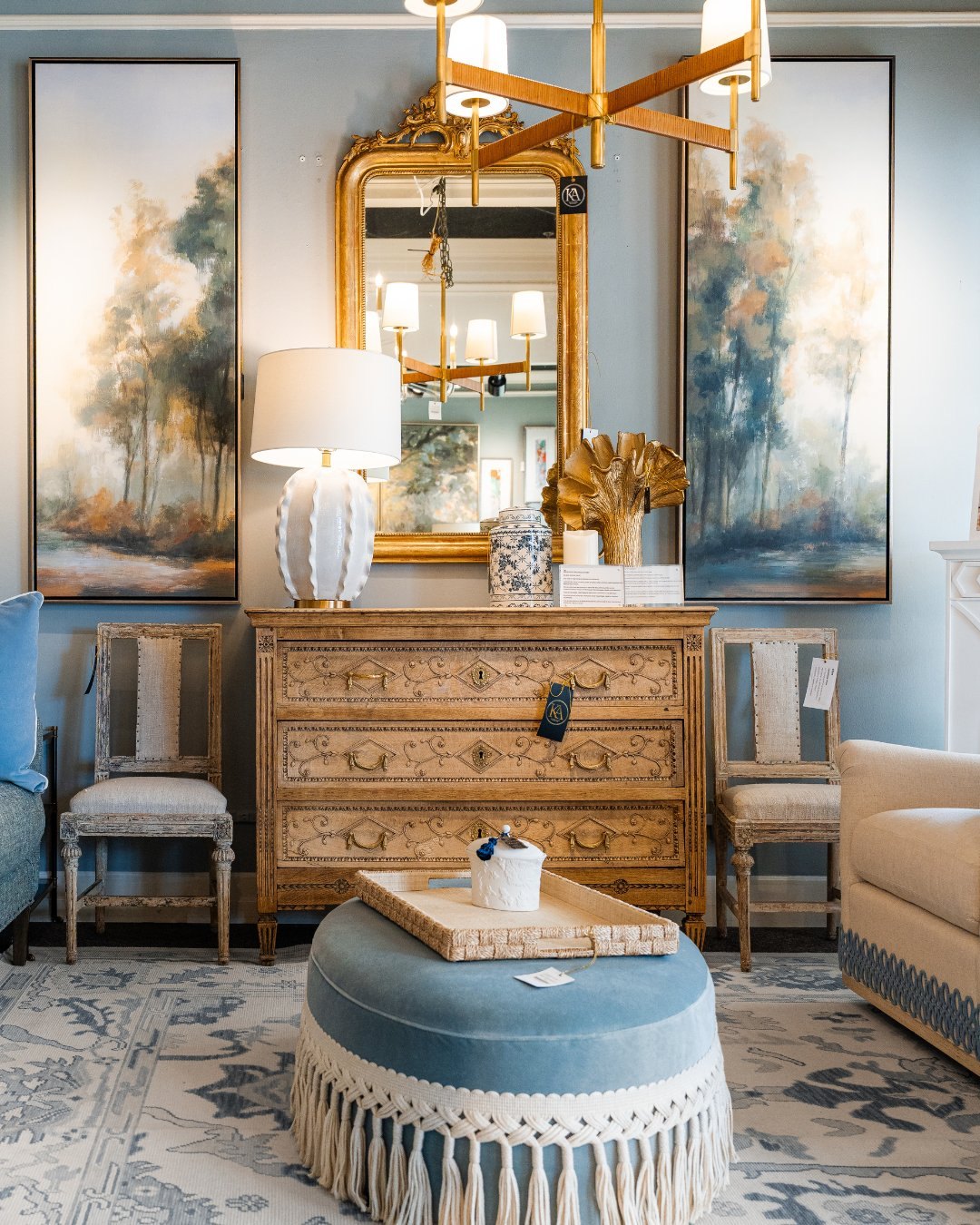
There's a quiet shift happening in the most beautiful rooms we're seeing right now — the perfectly matched, showroom-clean look is giving way to something with a little more soul. And that soul, more often than not, is an antique.
For a while, it felt like everything had to be new, sleek, and seamless. But the pendulum has swung back toward pieces with a history — and the numbers back it up. In 1stDibs' most recent annual survey of interior designers, the use of true antiques (pieces made before the 1920s) climbed from just over half of designers in 2024 to nearly two-thirds heading into 2026, while vintage sourcing hit its highest point in five years. Designers also said they plan to reach for old and collected pieces even more in the year ahead. In other words: this isn't a fleeting moment. Antiques are firmly, happily back.
What makes it especially exciting is how people are using them. The look of the moment isn't a stuffy, head-to-toe period room. It's an antique sideboard beneath a clean-lined modern sofa. A carved, time-worn mirror over a simple plaster wall. A grandmother's hutch standing confidently in a bright, contemporary kitchen. The magic is in the mix.
Why Old and New Belong Together
Designers have a saying: a room without contrast feels flat. That's exactly the problem antiques solve. A purely modern space can read a little cool — even a little anonymous, like it was ordered all at once from the same catalog. Bring in one piece with age and patina, and suddenly the whole room has warmth, depth, and a story to tell.
The two styles do different jobs, and that's the point. Modern pieces bring the clean structure, comfort, and function. Antiques bring the character, the craftsmanship, and the soul. Put them in the same room and each one makes the other look better — the antique feels fresh and intentional, and the modern piece feels grounded and collected. The result is a home that looks like it was gathered over a lifetime, not assembled over a weekend.
The secret isn't matching. It's harmonizing — letting pieces from different eras feel like they belong in the same room.
How to Mix Them Beautifully
Blending eras can feel intimidating, but it really comes down to a few guiding ideas. Here's how we approach it in our own projects:
Start with one hero piece
Choose a single standout antique — a hand-carved chest, a dramatic chandelier, a weathered farm table — and let it anchor the room. Build everything else around it.
Give them something in common
Tie the eras together with a shared thread: a repeated color, a similar wood tone, or a common material. One mutual attribute is enough to make contrast feel intentional, not chaotic.
Mind the scale
Pair pieces of similar visual weight. A chunky antique coffee table loves a streamlined modern sofa; a delicate vintage chair gets lost beside a bulky sectional.
Keep the backdrop calm
A neutral envelope — soft walls, simple large textiles — lets the contrast between old and new shine without competing for attention.
Let pieces breathe
Resist crowding the room with too many focal points. Give each special piece a little space, and the whole arrangement reads as curated rather than cluttered.
The Pieces Worth Hunting For
If you're ready to start, a few antique categories are having a real moment: glass-front hutches and cabinets that show off your favorite things, steamer trunks that double as storage and a coffee table, and wall tapestries that add texture and history where a framed print would fall flat. The beauty of these pieces is that they almost always come with a story — and a story is the one thing a brand-new room can't buy.
That's exactly why we love keeping a curated mix of antiques and fresh arrivals side by side on our showroom floor. Pairing the two is what we do best — and it's how we help every room we touch feel timeless instead of trendy.